Is a puffer jacket enough for a Melbourne winter in 2026? What about a trench coat in Sydney’s coastal chill? The problem is that Australian winter is not one climate. It is four. Brisbane barely cools down. Hobart freezes. Melbourne drizzles for weeks. Sydney gets a damp breeze that cuts through most coats. Buying one “winter jacket” and calling it done is exactly how you end up cold, sweaty, or both.
This article breaks down what works for each Australian winter zone in 2026, based on fabric science, real weather data, and what people actually wear. No fluff. No generic advice. Just the pieces that earn their place in your wardrobe.
Why Australian Winter Is Harder to Dress For Than European Winter
The mistake most people make is treating Australian winter like a milder version of a European one. It is not. European winter is dry cold. Australian winter, especially in coastal cities, is damp cold. Damp cold conducts heat away from your body roughly 20 times faster than dry air at the same temperature. That is why 10°C in Sydney feels colder than 0°C in Stockholm.
Another factor: temperature swings. In Melbourne, a single day can start at 6°C, hit 16°C by midday, and drop back to 8°C by evening. You cannot wear a single heavy garment. You need a system that adjusts.
Then there is the sun factor. UV index in Australian winter is still moderate to high in northern cities like Brisbane. You can get sunburned in July. So heavy black wool layers that work in London will make you overheat and sweat in Queensland.
The solution is not one jacket. It is a layered system where each piece does a specific job. And in 2026, the materials available make that easier than ever.
Layer 1: The Base Layer That Does Not Stink or Sweat
Most people skip the base layer. They wear a cotton t-shirt under a jumper and wonder why they are cold. Cotton holds moisture against your skin. When you stop moving, that moisture cools and drops your body temperature. This is the single most common failure mode in Australian winter dressing.
In 2026, the best base layer for Australian winter is merino wool, specifically 150-180gsm weight. Merino wool is naturally antimicrobial, so it does not smell after a day of wear. It wicks moisture away from the skin. And it breathes well enough that you do not overheat when the sun comes out.
Three brands dominate this space in Australia:
- Icebreaker Cool-Lite (150gsm, $80-100) — blends merino with TENCEL for extra breathability. Best for Brisbane and Sydney where humidity is higher.
- Macpac Merino Crew (180gsm, $70-90) — heavier, better for Melbourne and Hobart. Available in most Macpac stores across Australia.
- Uniqlo Heattech Extra Warm ($40) — a synthetic alternative that works well for the price. Not as breathable as merino, but fine for short commutes.
Do not wear cotton base layers in winter. Full stop. If you are cold in a jumper, the fix is almost always a merino base layer underneath, not a thicker jumper.
Layer 2: The Mid-Layer That Does the Heavy Lifting
The mid-layer is where insulation happens. In 2026, the trend is away from bulky knitwear and toward structured fleece and technical knits. The reason: a mid-layer needs to trap warm air without adding so much bulk that you cannot move or fit a jacket over it.
Fleece vs Knit: What to Choose
Fleece is lighter, dries faster, and breathes better than wool knit. But it looks casual. If you are in a city office or a nice restaurant, fleece reads as outdoor gear. Wool knit looks polished. The tradeoff is real.
For 2026, the best mid-layer for most Australian cities is a quarter-zip merino or merino-blend fleece. It gives you the warmth of fleece with a cleaner look. Macpac’s Alpha Direct fleece ($100) and Icebreaker’s Quantum Hoodie ($150) are the two standout options. Both are lightweight enough to wear under a trench coat but warm enough for a 10°C day on their own.
The mistake most people make: buying a mid-layer that is too thick. A 300gsm wool jumper under a puffer jacket will make you sweat the moment you step indoors. Aim for 200-250gsm in the mid-layer. That is warm enough for Australian winter without overheating.
Layer 3: The Outer Layer — By City, Not by Temperature

This is where most people get it wrong. They buy one jacket for the whole season. Australian winter requires at least two outer layers, because the conditions vary so much between cities and even between morning and afternoon.
| City | Dominant Winter Condition | Best Outer Layer 2026 | Why |
|---|---|---|---|
| Melbourne | Damp, windy, frequent drizzle | Water-resistant trench coat with removable liner | Wind is the main problem. A trench blocks wind better than a puffer. The liner adds warmth for cold days. |
| Sydney | Damp coastal breeze, mild temps (8-18°C) | Lightweight puffer jacket (600-700 fill power) | You need warmth without bulk. A puffer traps heat without windproofing, which is fine because Sydney wind is less aggressive. |
| Brisbane | Mild, humid, occasional cool morning | Vest (gilet) or light jacket | Full coats are overkill. A quilted vest keeps your core warm while letting your arms breathe. |
| Hobart | Cold, dry, occasional snow | Insulated parka with windproof shell | Hobart gets genuinely cold. You need a proper parka. The Kathmandu Gannet Parka ($250) is a solid choice. |
| Perth | Dry, windy, sunny days | Waxed cotton jacket or leather jacket | Perth winter is mostly dry. A waxed jacket blocks wind and looks good. No need for heavy insulation. |
The key insight: do not buy a coat based on the label “winter coat.” Buy based on your city’s specific winter. A puffer that works in Sydney will make you sweat in Brisbane and freeze in Hobart.
Footwear That Does Not Slip, Soak, or Look Clunky
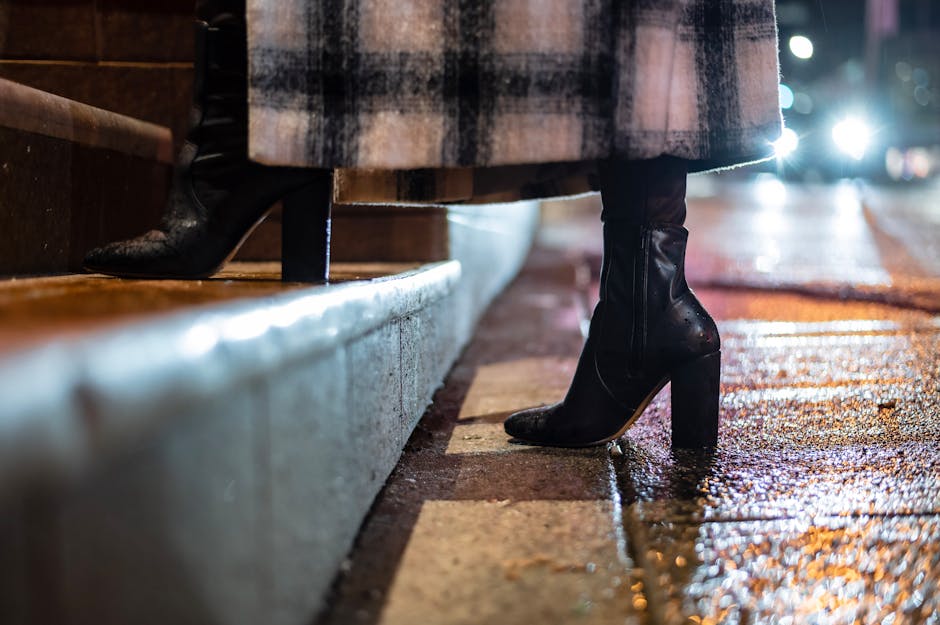
Australian winter footwear has one enemy: wet pavement. Melbourne’s tram tracks. Sydney’s sandstone footpaths. They get slick. The wrong sole means a fall.
In 2026, the standard for winter boots in Australia is a rubber lug sole with at least 4mm tread depth. Smooth leather soles are dangerous on wet concrete. Do not wear them.
Three shoe types that actually work:
- Blundstone boots (#500 or #585) — $180-220. Elastic-sided, waterproof, and the sole grips well. They are the default winter boot for a reason. They pair with jeans, chinos, and even some dresses.
- RM Williams Comfort Craftsman — $550-650. Chelsea boot with a rubber sole option. More formal than Blundstones. If you work in an office, these are the upgrade.
- Merrell Moab 3 Mid Waterproof — $200. Hiking boot that looks like a boot, not a sneaker. Best for Hobart or anyone who walks more than 20 minutes outdoors daily.
The mistake: wearing fashion boots with no tread. They look good in the store. On a wet Melbourne pavement, you will regret them. Buy boots based on the sole, not the silhouette.
Accessories That Matter (and Ones That Do Not)

Most people buy scarves and beanies as afterthoughts. They should not be. In damp cold, your extremities lose heat fastest. A good scarf and beanie cost under $100 combined and make a bigger difference to warmth than upgrading from a $200 jacket to a $500 one.
Scarves: Wool or Cashmere, Not Acrylic
Acrylic scarves look fine but do not insulate when damp. Merino or cashmere scarves retain warmth even when slightly wet. The Uniqlo Cashmere Scarf ($70) is the best value option in Australia for 2026. It is 100% cashmere, soft, and warm. The Country Road Lambswool Scarf ($90) is a close second.
Beanies: Fit Matters More Than Fabric
A beanie that sits loose on your head does nothing. The warmth comes from the seal around your ears. Look for a beanie with a folded brim that sits snugly. Macpac’s Merino Beanie ($40) is the best balance of warmth and fit. It does not itch, and it stays put.
Gloves: Only Necessary in Hobart and Canberra
For Melbourne and Sydney, gloves are optional. Your hands stay warm enough in pockets. For Hobart and Canberra, get a pair of Icebreaker Quantum Gloves ($60). They are merino-lined, touchscreen-compatible, and thin enough to wear under thicker gloves if needed.
When NOT to Buy Winter Clothes in Australia (and What to Buy Instead)
Here is the counterintuitive truth: do not buy your winter wardrobe in May or June. That is when prices are highest and selection is worst. The best time to buy winter clothes in Australia is late August to September, when retailers clear stock for spring. You can save 30-50% on the same items.
But there is a bigger question: when should you not buy a winter item at all?
- Do not buy a heavy down parka if you live in Brisbane or Perth. You will wear it maybe 10 days a year. Buy a vest instead. It covers the cold mornings and lets you shed it by midday.
- Do not buy leather gloves if you live in a wet city. Leather soaks through and takes days to dry. Buy synthetic or merino-lined gloves instead.
- Do not buy a wool overcoat if you walk more than 20 minutes to work. Wool overcoats are heavy. You will sweat. Buy a technical puffer or a trench coat with a liner. Lighter, more breathable, easier to carry.
The single most important takeaway: Australian winter is not one season. It is five microclimates. Dress for your city, not for the calendar.
Disclosure: This article may contain affiliate links, including links connected with AWIN. Fashion Guidebook is operated by Digital Sail Technology Limited and may earn commissions at no extra cost to readers.