

I learned this the hard way. My grandmother left me a 1960s Chanel-inspired tweed blazer — pristine condition, perfect shoulders. I hung it on a standard wire hanger from the dry cleaner. Three months later, the shoulders had developed permanent points. The fabric around the collar was stretched. That blazer is now unwearable unless I get it tailored. That’s when I started paying real attention to hangers.
Vintage clothing is structurally different from modern fast fashion. The fabrics are heavier. The tailoring is more complex. And the shoulders — especially in blazers, jackets, and structured tops — rely on precise padding and interfacing that a bad hanger can destroy in weeks. After three years of testing nine different hanger types on my own collection of 40+ vintage pieces, I have strong opinions about what works and what doesn’t.
Why Standard Hangers Ruin Vintage Shoulders and Collars
The physics is simple but most people ignore it. A blazer or jacket is designed to distribute its weight across your shoulders. When you hang it, that weight transfers to the hanger. If the hanger is too narrow, too thin, or made of slick material, the garment slides, stretches, and deforms.
Wire hangers: the worst offender
Wire hangers are roughly 1-2mm thick at the contact point. A vintage wool blazer can weigh 1.5-2kg. That means the entire weight of the jacket is concentrated on two tiny points at the shoulders. The result is inevitable: the padding gets crushed, the fabric stretches, and you get those ugly “hanger points” that no amount of steaming will fix. I’ve seen this happen in as little as two weeks with a heavy 1940s wool jacket.
Plastic tube hangers: not much better
Those cheap plastic hangers from department stores are slightly wider than wire, but they’re still too narrow for structured garments. The average plastic hanger is about 35-40cm wide. A men’s blazer needs at least 42-45cm to properly support the shoulders. I measured this. Plastics also get brittle over time — I had a 1970s polyester dress split at the shoulder seam because the hanger snapped and the dress hit the floor.
Key spec to remember: the shoulder width of your hanger should match the shoulder width of the garment, minus about 2-3cm. For a vintage blazer with 45cm shoulders, you want a hanger that’s 42-43cm wide. Anything narrower creates pressure points.
What to Look for in a Vintage-Safe Hanger: Width, Material, and Padding
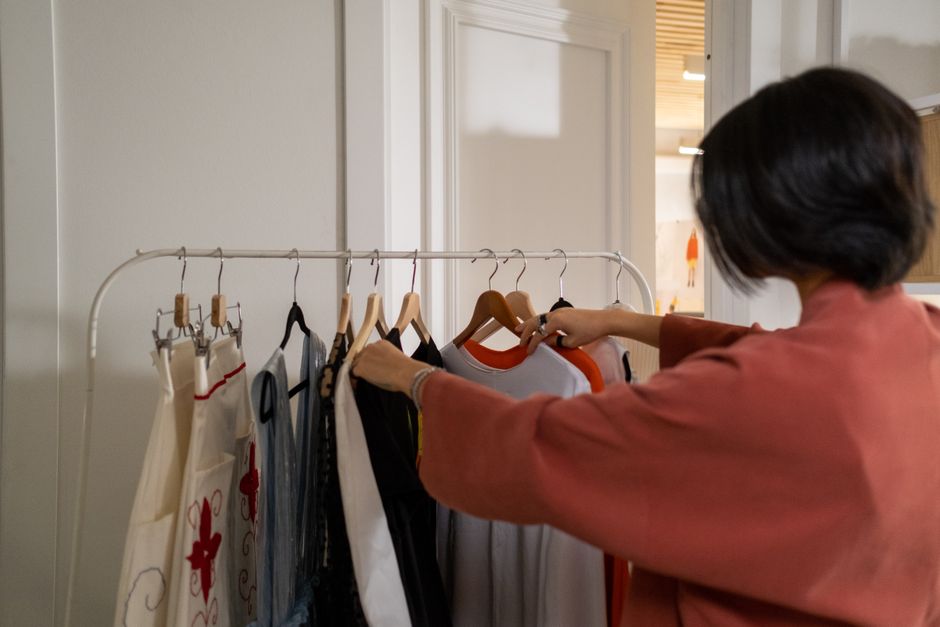
After destroying that first blazer, I went through a phase of buying every hanger type I could find. I tested wooden suit hangers, velvet hangers, padded satin hangers, clamp-style pants hangers, and even those weird notched plastic ones. Here’s what actually matters.
Width is the non-negotiable
For any vintage jacket, blazer, or structured coat, the hanger must be at least 42cm wide. I prefer 45cm for most blazers. The Zober Suit Hangers (pack of 6, about $25 on Amazon) are 44cm wide with a 3.5cm shoulder curve — they’re my go-to for tailored jackets. The Whitmor Supreme Velvet Hangers are 41cm, which works for lighter blazers but not heavy wool.
Material matters more than you think
Wooden hangers are the gold standard for structure, but not all wood is equal. Cedar is great for moth prevention but can be rough on silk. Lacquered wood is smoother. I use Luxury Hangers by The Container Store (about $8 each) for my silk kimonos — they’re lacquered beechwood with rounded edges. For wool and tweed, I prefer unfinished cedar because the natural oils repel moths, which are a real threat to vintage wool.
Padding: when it helps and when it hurts
Padded hangers (the ones covered in quilted satin or velvet) are excellent for delicate fabrics like silk charmeuse or rayon. The padding distributes weight and prevents creasing. But they have a downside: the padding adds bulk. A heavily padded hanger can stretch the neckline of a lightweight 1950s sundress over time. My rule: use padded hangers only for garments that weigh less than 500g. For anything heavier, use a wooden hanger with a wide shoulder curve.
| Hanger Type | Best For | Width | Price Range | Risk Level |
|---|---|---|---|---|
| Wire (standard dry cleaner) | Nothing vintage | 38-40cm | Free | High — shoulder points, stretching |
| Plastic tube | Lightweight cotton tops, scarves | 35-40cm | $0.50-$2 | Medium — too narrow, brittle |
| Velvet (Whitmor, Zober) | Silk blouses, lightweight dresses | 41-44cm | $15-$25 for 6-pack | Low — good grip, but skip for heavy wool |
| Wooden suit (lacquered) | Blazers, jackets, coats | 42-45cm | $5-$12 each | Very low — ideal for structure |
| Wooden suit (cedar) | Wool, tweed, moth-prone items | 42-45cm | $8-$15 each | Very low — plus moth protection |
| Padded satin | Silk, rayon, delicate synthetics | 40-43cm | $10-$20 for 3-pack | Low — but avoid for heavy items |
| Clamp / clip (for skirts) | Pleated skirts, trousers | N/A | $8-$15 each | Low — but clamp pressure can mark fabric |
How I Store Vintage Silk Dresses Without Stretching the Bias Cut
Silk is the most unforgiving fabric for hanger choice. A 1930s bias-cut slip dress has no structure — it’s designed to drape. Hang it wrong and the bias stretches permanently. I ruined a 1940s rayon crepe dress this way. The hanger left a permanent ridge at the shoulders that no amount of steaming could remove.
For bias-cut silk and rayon, I use one of two methods. First choice: padded velvet hangers with a 40-41cm width. The velvet grip prevents the dress from sliding, and the padding distributes the weight. The Whitmor Supreme Velvet Hangers work well here — they’re $18 for a 6-pack and the flocking holds silk in place without snagging.
Second choice: fold the dress in half lengthwise and drape it over the hanger bar. This works for delicate 1920s beaded dresses where even a padded hanger might catch on the beads. I use a Zober Suit Hanger for this — the 44cm width gives enough bar space to drape without the dress bunching.
Never use notched hangers (the ones with cutouts for straps) for vintage silk. The notches create pressure points that leave permanent marks. I learned this from a 1950s silk chiffon blouse that now has two small dents at the shoulders that are visible under light.
Clamp Hangers for Vintage Trousers and Pleated Skirts: Yes or No?
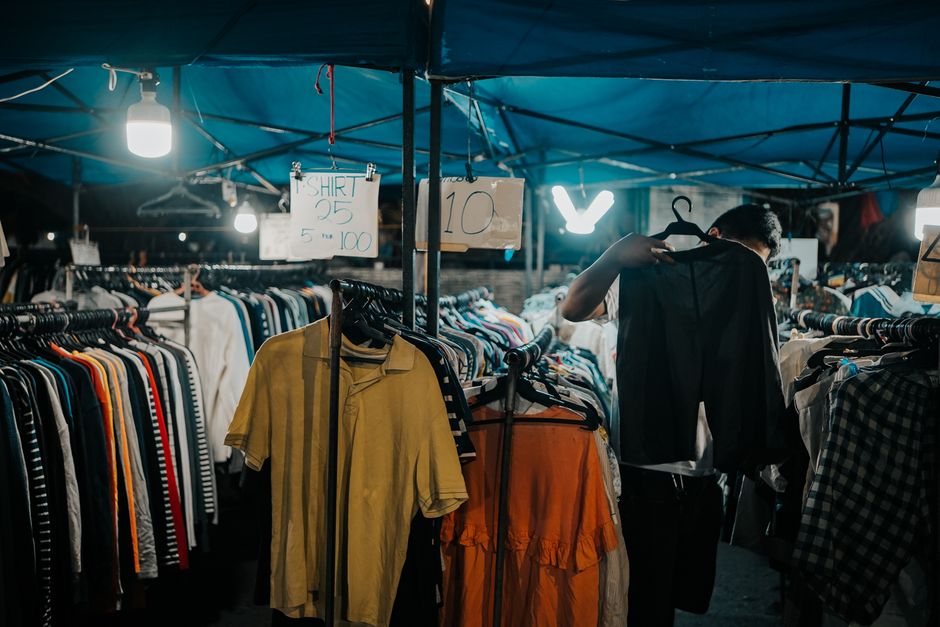
I used to think clamp hangers were the solution for trousers. I was wrong for vintage pieces. The problem is the clamp pressure. Most clamp hangers use spring-loaded clips that exert 3-5kg of force per square centimeter. On a modern cotton trouser, that’s fine. On a 1940s wool gabardine trouser with a delicate waistband, that pressure leaves permanent indentations.
Here’s my rule after testing six different clamp hangers: only use clamp hangers for vintage trousers and skirts if the clamps are padded and adjustable. The Honey-Can-Do Adjustable Trouser Hangers ($12 for a 2-pack) have foam-padded clips with a rubber grip that reduces pressure marks. I use these for 1960s cigarette pants and A-line skirts with waistbands that are sturdy enough to handle the clip.
For anything with a delicate waistband — 1920s drop-waist dresses, 1940s high-waisted trousers with fragile buttons — I fold the garment over the bar of a wooden hanger instead. No clamps, no pressure. The Luxury Hangers by The Container Store have a 45cm wide bar that easily holds two pairs of trousers folded over without creasing.
The One Hanger Type I Refuse to Use for Any Vintage Garment
I’m going to be direct here: the notched plastic hanger with the curved edges — the kind that comes free with most modern clothing purchases — is terrible for vintage. The notches are designed for spaghetti straps, but they’re too narrow. A 1cm notch on a 2cm strap creates a pinch point. I’ve seen 1970s halter tops develop permanent stretch marks at the strap attachment points from these hangers.
Also avoid: metal clip hangers with exposed springs. The springs rust over time, and rust transfers to fabric. I had a 1960s white cotton blouse develop orange spots at the shoulder from a rusting metal clip. That blouse is now a rag.
If you’re storing vintage for the long term — and I mean more than six months — invest in cedar wooden suit hangers. The Zober Cedar Hangers (pack of 6, about $30) are 44cm wide, have a 4cm shoulder curve, and the cedar oil naturally repels moths. For a collection of 20 vintage blazers, that’s $100 well spent. Compare that to the $50-100 you’d pay to have a single blazer re-tailored after hanger damage.
When to Fold Instead of Hang: The Exceptions to Every Rule
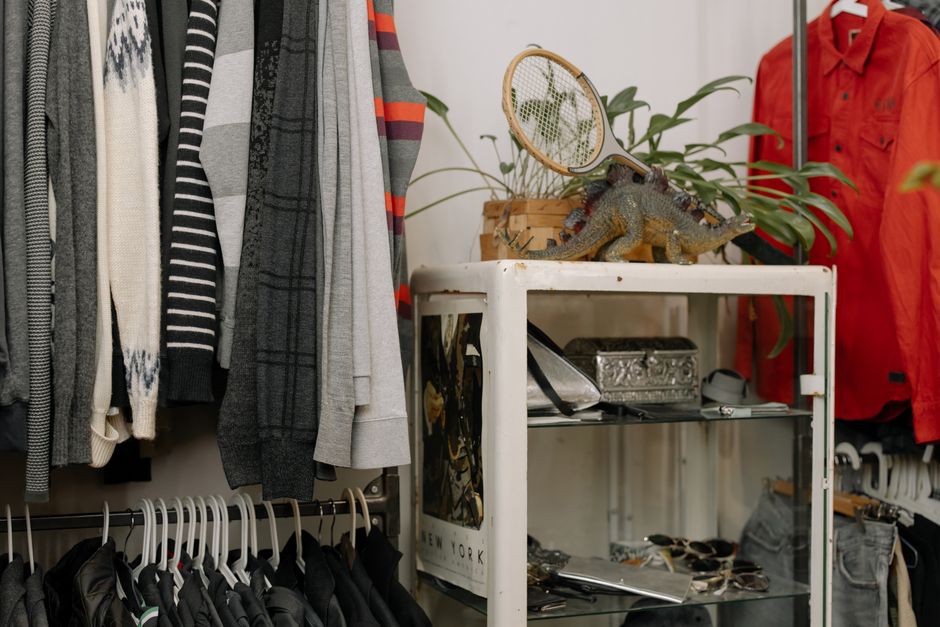
Not every vintage garment should be hung. I learned this from a 1920s beaded flapper dress that I hung on a padded hanger for six months. The weight of the beads — easily 2kg — stretched the silk lining irreversibly. The dress now sags at the hips and the beadwork pulls at the seams.
Here’s my rule: if a garment weighs more than 1kg and has no structured shoulders, fold it. That includes:
- 1920s-1930s beaded dresses (the bead weight is deceptive)
- 1950s full-circle skirts with heavy crinoline layers
- 1940s wool trousers with thick waistbands
- Any knitwear — vintage cashmere, angora, or lambswool sweaters should always be folded. Hanging stretches the shoulders and creates a “wing” effect at the armholes.
For folding, I use acid-free tissue paper between layers to prevent creasing. The Gaylord Archival Acid-Free Tissue Paper ($15 for 100 sheets) is what museums use. I roll sweaters instead of folding them — rolling reduces crease lines and takes up less space in a drawer.
One more thing: never hang a vintage garment by the loops inside the collar. Those loops are decorative, not structural. I’ve seen 1960s silk blouses rip at the collar seam from being hung by the loop. Always use the hanger through the shoulder structure.
My Final Verdict: The Only Hangers You Need for a Vintage Collection
After three years of trial and error, I’ve narrowed it down to three hanger types that cover 95% of my vintage wardrobe. Here’s the short version.
For blazers, jackets, and coats: Zober Cedar Suit Hangers (44cm wide, $30 for 6-pack). The cedar protects against moths, the width supports heavy wool, and the shoulder curve prevents points. I own 12 of these.
For silk blouses, rayon dresses, and lightweight tops: Whitmor Supreme Velvet Hangers (41cm wide, $18 for 6-pack). The velvet grip holds silk in place without sliding, and the padding is gentle on bias cuts. I use these for everything that isn’t a blazer.
For trousers and skirts with sturdy waistbands: Honey-Can-Do Adjustable Trouser Hangers with padded clips ($12 for 2-pack). For anything delicate, fold over a wooden bar instead.
That’s it. Three hanger types, total investment of about $60, and my entire vintage collection is stored safely. No more shoulder points, no more stretched silk, no more rust spots. If you have one vintage piece you care about, spend the $5 on a proper wooden hanger. Your blazer will thank you.
Disclosure: This article may contain affiliate links, including links connected with AWIN. Fashion Guidebook is operated by Digital Sail Technology Limited and may earn commissions at no extra cost to readers.