

You have an echocardiogram scheduled. The appointment card says nothing about what to wear. So you show up in a one-piece jumpsuit with a chunky necklace and a underwire bra. Now you are undressing in a cold room while a sonographer waits. The necklace is tangled. The jumpsuit takes five minutes to get back into. You could have avoided all of this.
Here is exactly what to wear — and what to skip — so the test takes 30 minutes and you leave without a single wardrobe regret.
Why Your Outfit Matters More Than You Think
A standard transthoracic echocardiogram requires the sonographer to place a probe on your chest. They need access to your sternum, left ribs, and upper abdomen. Anything in the way — fabric, metal, thick seams — slows them down.
The gel is water-based. It gets on your skin, sometimes on your clothes if the sonographer is rushing. You will be asked to lie on your left side for several minutes. Wires from the ECG leads attach to small sticky pads on your chest. Those wires clip to a box that sits on the bed. If you are wearing a dress or a romper, you are essentially topless for the duration.
Most people feel awkward enough during a heart test. The wrong outfit adds stress. The right outfit makes the whole thing feel routine.
The Golden Rule: Two Separate Pieces, Easy Access to Your Chest

Wear a top and bottom that separate at the waist. No one-piece anything.
Best option: A loose button-down shirt or a zip-up hoodie over a simple cotton bra or bralette. Pair with leggings, sweatpants, or jeans that have an elastic or button waist. When you need to expose your chest, you unbutton or unzip the top layer. Your bottom half stays fully dressed.
Second best: A loose crewneck sweatshirt that you can lift to your collarbone. This works if the sweatshirt is not tight across the chest. You pull it up, the sonographer works, you pull it down. No full undressing.
Skip entirely: Turtlenecks, mock necks, high-neck sweaters, bodysuits, overalls, jumpsuits, rompers, and any top with a zipper that runs up the back. You will have to take it all off.
What About Bras? The Metal Problem
Underwire bras contain metal. Metal reflects ultrasound waves. It creates artifacts on the image — white streaks that obscure the heart walls. The sonographer will ask you to remove it or pull it down.
If you wear a wireless bralette or a sports bra with no metal clasps, you can usually keep it on. The sonographer will slide the straps off your shoulders and work around the fabric. This is faster and more comfortable for you.
Best bra choices for an echo:
- Cotton bralette with no underwire
- Seamless pullover sports bra (no zipper, no clasp)
- Soft-cup wire-free bra from brands like True & Co., Soma, or Calvin Klein
Worst choices:
- Any underwire bra (you will remove it)
- Push-up bras with heavy padding
- Lace bras with metal decorative rings or clasps on the front
Jewelry, Accessories, and Other Small Surprises

Necklaces are the number one delay. A chain that falls onto your chest has to be moved. If it is long, it swings into the probe path. The sonographer will ask you to tuck it into your shirt or take it off. Same with pendants that hang at sternum height.
Remove before you arrive:
- Necklaces (any length)
- Choker necklaces
- Body chains or chest jewelry
- Piercings in the chest or sternum area (you can leave these in, but they may need to be taped down)
Earrings, rings, and watches are fine. They do not interfere with the ultrasound.
One thing people forget: chest pockets. A phone in your breast pocket creates a lump under the fabric. The sonographer will ask you to take it out. Empty your pockets before you lie down.
What to Bring That Makes the Experience Easier
You will be in the room for 30 to 45 minutes. The room is usually cool. You lie still on a narrow bed. Consider these items:
| Item | Why it helps |
|---|---|
| Slip-on shoes (no laces) | You remove your shoes. Laces take time. Slip-ons save 30 seconds and you do not have to bend over. |
| A small towel or scarf | Some people prefer to cover their hair or face while lying on their side. Not necessary, but comforting if you feel exposed. |
| Your phone (silent mode) | You can hold it during the test if it helps you relax. Just keep it away from your chest. |
| A hair tie or headband | Long hair gets in the way of the neck probe. Tie it back before the sonographer asks. |
Do not bring a big bag or purse. There is limited space in the exam room. A small crossbody or wristlet is enough for your phone, keys, and wallet.
What Happens If You Wear the Wrong Thing
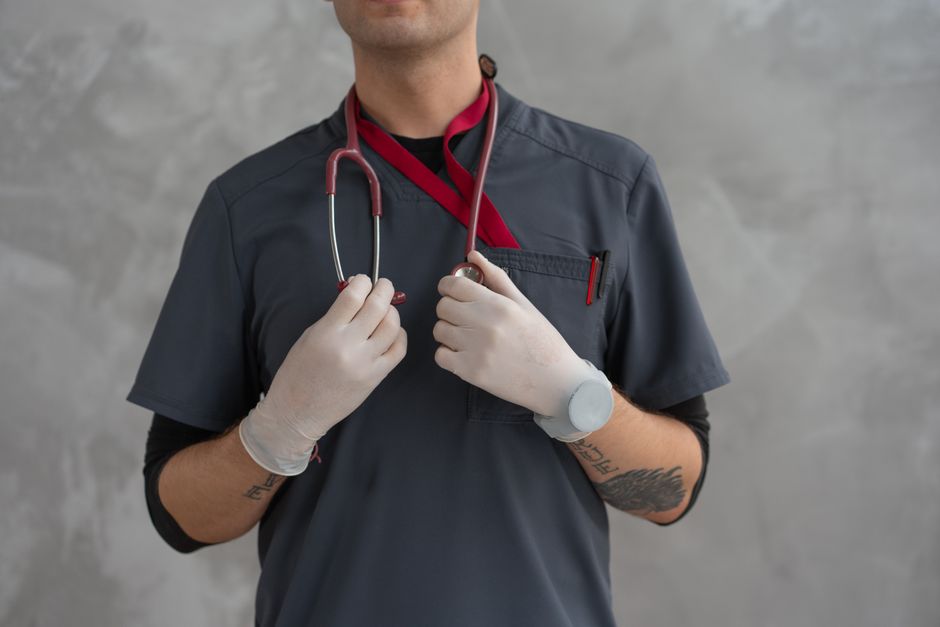
You will be given a hospital gown. It opens in the front. It is made of thin cotton or paper. It does not cover your back completely. You will sit in a chair for ten minutes wearing nothing but that gown and your underwear, waiting for the sonographer to call you in.
This is not the end of the world. But it is avoidable. The gown adds zero comfort and zero dignity. It also slows the test because the sonographer has to adjust the fabric repeatedly to keep your chest exposed.
If you wear the right two-piece outfit, you never touch a gown. You stay in your own clothes. You leave feeling like you just had a normal medical appointment, not an undressing ordeal.
Quick Verdict: The Exact Outfit We Recommend
For women: A zip-up cotton hoodie over a seamless bralette, with high-waisted leggings or joggers. Slip-on sneakers. Hair in a low ponytail. No necklace. No watch with a metal band (it is fine, but the band may slide against the bed).
For men: A loose cotton T-shirt or button-down shirt, worn with sweatpants or jeans. No chest chains. No thick wallet in the back pocket (you lie on your back, it is uncomfortable).
For anyone: The goal is a top that opens or lifts from the front, a bottom that stays on, and zero metal near your chest. That is it. Two layers. No metal. Done.