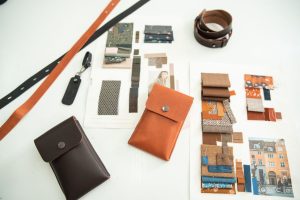
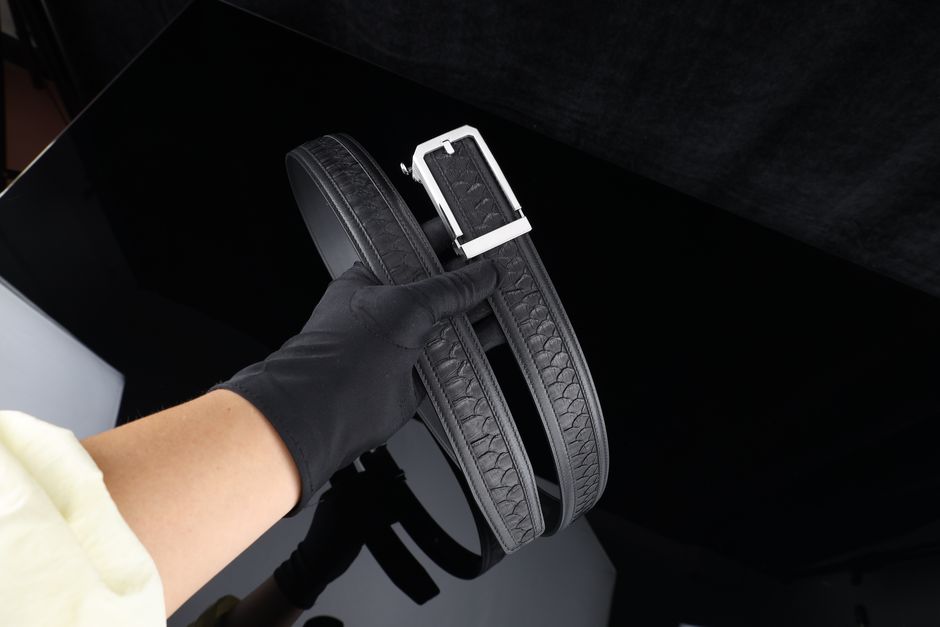
Why do belt and bag proportions change an outfit?
Do your accessories look separate from your outfit instead of part of it? The problem may not be color or price. It may be scale.
A belt and a bag create visual lines across the body. The belt runs horizontally and can shorten or divide the torso. The bag adds mass at the waist, hip, or side of the body. When both pieces match the volume of your clothing, the outfit looks deliberate. When they fight the clothing, the outfit can feel crowded, top-heavy, or oddly unfinished.
Scale is about visual weight
A narrow belt with a flowing dress keeps the waist quiet. A wide belt over a heavy knit gives the outfit enough structure to hold its shape. The same rule applies to bags. A small bag can disappear beside a long coat, while an oversized tote can overwhelm a slim slip dress.
The useful measurement is not your body size. It is the relationship between accessory width, clothing volume, and the area where each item sits.
The two-accessory rule
Start by choosing one dominant accessory. If the bag has a large logo, chain, or rigid shape, use a simpler belt. If the belt has a wide buckle or strong texture, choose a quieter bag. Matching every metal detail can look forced; matching one repeated element, such as warm brass or dark brown leather, usually looks more natural.
Best starting ratio: pair a 0.75 to 1 inch belt with a small or medium bag for most jeans, trousers, and casual dresses. Move toward a 1.25 to 2 inch belt only when the clothing has enough volume to support it.
How to measure the right belt width
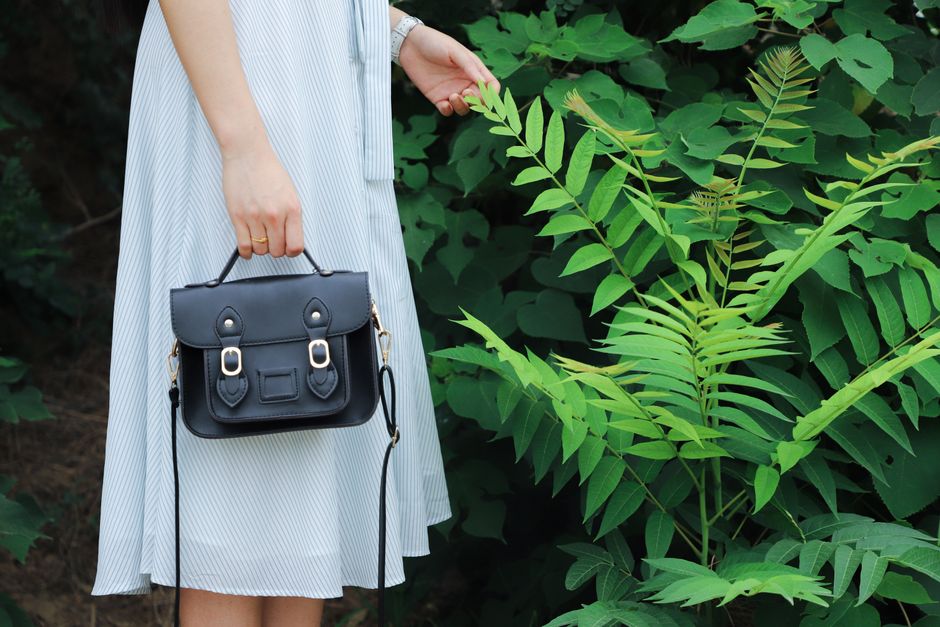
Buying a belt by color alone is a reliable way to end up with an accessory that looks wrong in real outfits. Measure the belt against the belt loops, the waistband, and the fabric weight of the clothes you already wear.
Use the belt-loop test
- Measure the height of the smallest belt loop on your favorite jeans or trousers.
- Choose a belt that is at least 0.1 inch narrower than that loop so it passes through without bunching.
- For standard denim loops, a 1 to 1.25 inch belt is the safest range.
- For dresses worn without loops, judge the belt against the fabric. Thin jersey usually needs 0.5 to 1 inch; wool, denim, and leather can handle 1.25 to 2 inches.
The Madewell The Everyday Belt is listed at $68 and has a 1 inch width. That makes it a useful reference point for everyday denim, chinos, and medium-weight dresses, not a universal answer for every outfit.
Match the buckle to the outfit line
A small buckle keeps attention near the waist without becoming the center of the look. A large western, oval, or double-ring buckle works best when the rest of the outfit has simple shapes. Do not place a large buckle under a busy print and then add a highly decorated bag. The eye has nowhere to rest.
Verdict: choose width before color. A correctly sized brown belt will work harder than a black belt that cannot pass through your trousers or visually dominates your dress.
How should bag size relate to your body and clothing?
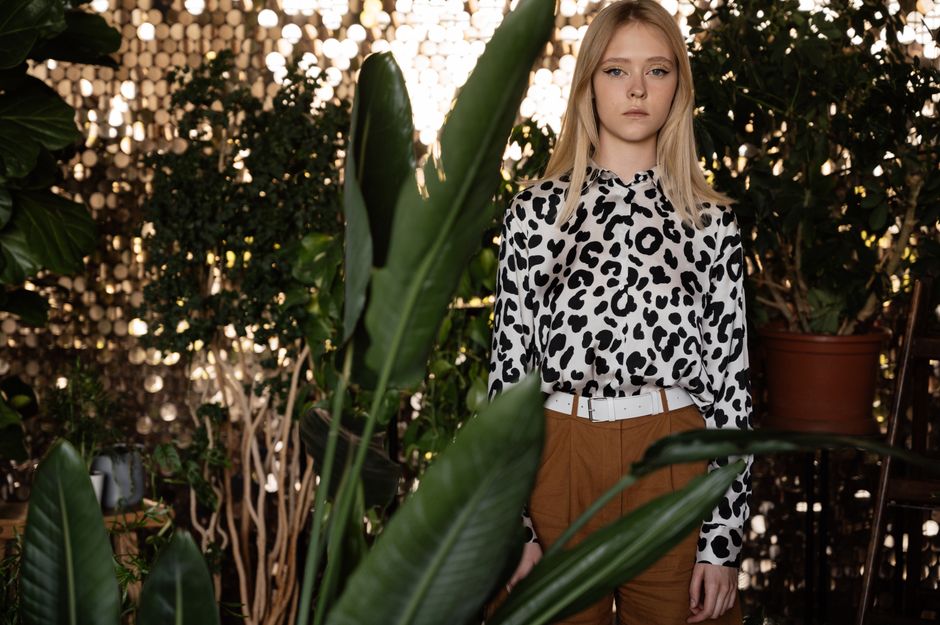
Bag proportion is easier to judge when you stop treating it as a simple small-versus-large decision. Look at three dimensions: height, width, and depth. A bag may be wide but flat, tall but narrow, or small but bulky. Each shape changes the outfit differently.
Match bag height to the outfit’s vertical line
A tall bag supports long coats, straight trousers, maxi skirts, and other outfits with a strong vertical line. A compact bag works better with cropped jackets, short cardigans, fitted tops, and outfits that already stop near the waist. The point is balance. A tiny bag beside a floor-length coat can look decorative rather than useful, while a tall tote with a cropped jacket can make the upper body feel crowded.
The Cuyana Classic Easy Tote is listed at $298 and measures about 12.5 inches high by 20.5 inches wide and 5 inches deep. It weighs 1.6 pounds and fits a 15 to 16 inch laptop. Those dimensions make it a work tote, not a casual little handbag. It needs trousers, denim, a coat, or another substantial garment to look proportionate.
Use width and depth to control visual weight
A wide, shallow bag spreads across the body and can make a simple outfit look polished. A deep bag projects outward and adds more bulk, especially when worn crossbody. For everyday errands, a bag around 8 to 11 inches wide and 2 to 4 inches deep is easier to balance with jeans, knitwear, and casual dresses.
Strap length also matters. A crossbody that lands at the widest part of the hip draws attention there. Raise or lower it by a few inches, then check the line created by the strap. A shoulder bag that ends near the waist can reinforce a belt; one that ends at the hip creates a second horizontal break.
Do not buy an oversized tote simply because it can hold more. If you carry only a phone, wallet, keys, and sunglasses, a large empty bag will collapse and look less refined. Buy capacity for your real daily load, then choose shape for the clothes you actually wear.
Which everyday belt-and-bag pairings are worth buying?
My clear pick for most wardrobes is a simple 1 inch leather belt paired with a medium structured bag. That combination covers jeans, trousers, casual dresses, and office clothes without making every outfit look styled around accessories.
Best budget-conscious belt
The Madewell The Everyday Belt at $68 is the practical choice for repeated wear. Its 1 inch width fits common belt loops and stays quiet beside patterned clothing. Choose black for black shoes and dark denim; choose warm brown if your wardrobe includes tan boots, cream knitwear, and olive or camel outerwear.
Best compact bag and best work bag
For a smaller everyday bag, the Coach Tabby Shoulder Bag 20 is listed at $375 and measures about 7.75 by 4.25 by 2.75 inches. It works with slim jeans, cropped jackets, and dresses because it has enough structure without taking over the outfit.
For a larger work option, the Cuyana Classic Easy Tote wins because its 1.6 pound weight and laptop capacity are more useful than a purely decorative oversized bag. The Coach Tabby Shoulder Bag 26, listed at $475 and measuring about 10.25 by 6 by 3.25 inches, is the better middle ground for days that need a wallet, phone, sunglasses, and a few small extras but not a laptop.
Bottom Line: buy the Madewell belt first, the Coach Tabby 20 for compact days, and the Cuyana tote for work. The Coach Tabby 26 is the bridge between those two uses.
What proportion mistakes make belts and bags look wrong?
Why does my belt look too heavy?
A belt usually looks too heavy when its width exceeds the waistband or when its buckle is larger than the visible scale of the outfit. A 2 inch belt over a thin silk dress can make the waist look segmented. The fix is not always a thinner belt; sometimes a heavier fabric, jacket, or boot brings the outfit back into balance.
Why does my bag make me look shorter?
A bag can interrupt your height when it lands across the waist or at the widest point of the hip. Test a shorter shoulder drop or move a crossbody slightly higher. Tall, narrow bags also preserve more vertical line than wide bags that spread outward.
When should you not buy the larger bag?
Do not buy the larger bag if you need it only for a rare laptop day. A large tote carried half-empty can overwhelm casual clothing and invite overpacking. Use a smaller bag for daily errands and reserve the Cuyana Classic Easy Tote for actual work or travel days. That is a better use of $298 than paying for capacity you do not use.
Also check the payment terms before buying. Some fashion checkout plans show 0% introductory APR, while other installment offers can run from 10% to 35.99% APR and may charge late fees from $0 to $15. Read the actual terms, including return rules and finance charges. This is not financial advice.
What is the fastest final test for belt and bag proportions?
Put on the complete outfit, then check the belt width against the waistband, the bag height against the clothing’s vertical line, and the bag depth against your actual daily contents; if two accessories create strong horizontal breaks or both look visually heavy, replace the quieter piece with a simpler version. For most everyday outfits, a 0.75 to 1.25 inch belt and a small or medium bag will produce the cleanest balance, while wide belts and large totes should be reserved for substantial fabrics, tailored layers, or real carrying needs. The best first purchase is the Madewell The Everyday Belt at $68, followed by a compact structured bag such as the Coach Tabby Shoulder Bag 20 at $375; choose the Cuyana Classic Easy Tote at $298 only when its laptop capacity solves a real work problem. That test is enough to reject the wrong accessory before the return window becomes the most expensive part of the purchase.