

The common misconception is that the softest cashmere sweater is automatically the best one. It is not. A very soft sweater can use short fibers, a loose knit, heavy chemical finishing, or a thin fabric that pills after a few wears. Softness matters, but it only answers one question: how does this sweater feel in the fitting room?
Good cashmere should also hold its shape, resist rapid pilling, feel warm without becoming bulky, and show careful work at the seams, cuffs, and collar. The label rarely gives you every answer, so you need a repeatable inspection method. Use the checks below before paying $50, $100, or $300 for a sweater that may look identical online.
2. Read the Label for Fiber Content and Construction
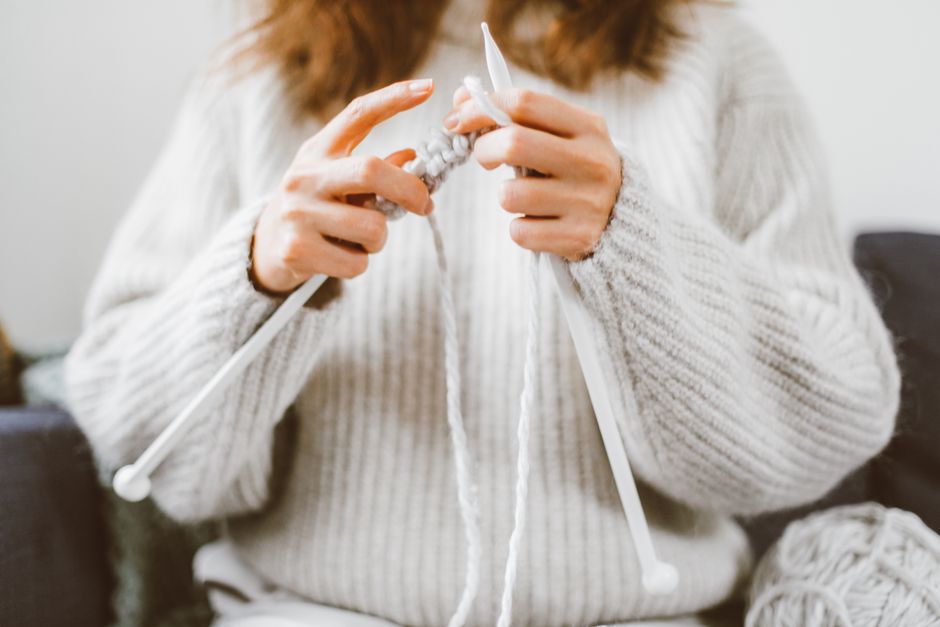
A good label lets you answer three questions quickly: what fibers are inside, how much cashmere does the garment contain, and how has the maker built the fabric? Start with the fiber-content line. A sweater labeled 100% cashmere should not quietly include wool, viscose, nylon, or silk in the main body. Blends are not automatically bad, but they should cost less and serve a clear purpose.
Use these label checks in order
- Confirm the percentage. Look for 100% cashmere if you want the full cashmere hand and warmth. A 90% cashmere and 10% wool blend may wear better, but it should not command the same price as pure cashmere.
- Find the country of origin. Mongolia, Inner Mongolia, Scotland, Italy, and China can all produce excellent garments. Country alone does not prove quality. The yarn, knitting, finishing, and factory controls matter more.
- Check the care instructions. Hand wash cold and lay flat usually signal that the brand expects careful ownership. A dry-clean-only label does not prove higher quality; it may simply reflect the maker’s risk policy.
- Look for ply and gauge. Two-ply yarn generally gives you more stability than one-ply yarn. Gauge tells you how tightly the machine knits the fabric, although brands do not always publish it.
- Find the garment measurements. Chest width, body length, sleeve length, and shoulder width tell you more than a model’s height and size alone.
Do not confuse certification with a quality score
Certifications can support responsible sourcing, animal welfare, or factory standards, but they do not turn a thin sweater into a thick one. J.Crew’s Cashmere Classic-fit Crewneck costs $148 and states that at least 30% of the cashmere carries Good Cashmere Standard certification. That information helps with sourcing questions, but you still need to inspect the knit density, shape, and seams.
The best label is not the one with the most marketing language. It is the one that gives you enough facts to predict how the sweater will behave after six months of wear.
4. Inspect a Cashmere Sweater in Five Minutes
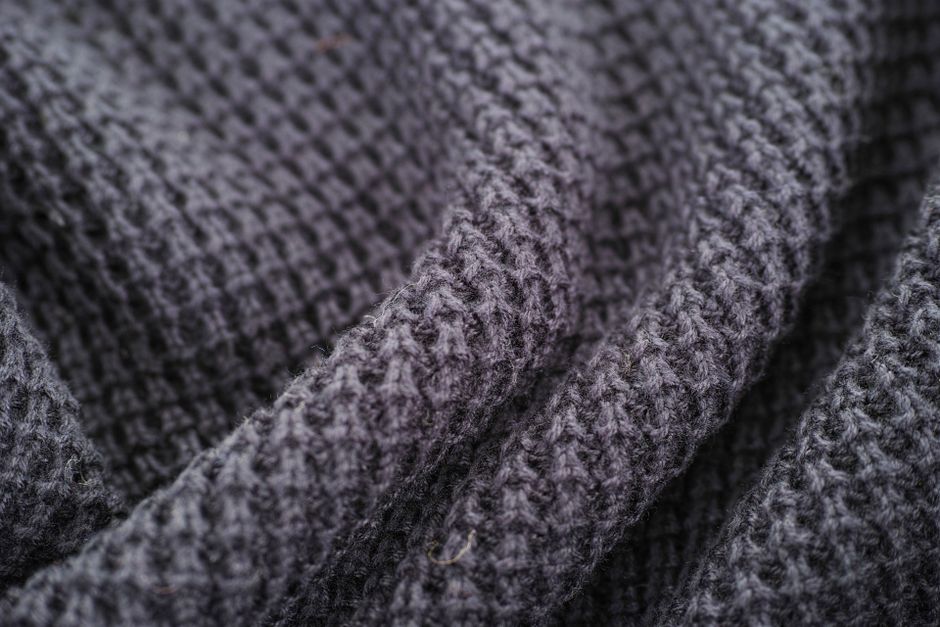
Online photos cannot show you every construction problem. If you can handle the sweater in a store, use this five-minute inspection. It takes less time than trying on three pairs of jeans, and it catches the faults that cause most returns.
Minute one: stretch the fabric gently
Hold the body with both hands and pull it sideways by about two inches. Release it. A quality knit should return close to its original shape instead of staying visibly stretched. Do not yank the sweater. You are testing recovery, not trying to damage it.
Minute two: inspect the surface
Look at the underarm, side seam, and cuff. A few loose fibers do not mean the sweater is defective. New cashmere can shed lightly. Dense clusters of pills, fuzzy patches, or uneven shine suggest friction, short fibers, or aggressive finishing. Pay special attention to dark colors because surface flaws show more clearly.
Minute three: check the seams
Turn the sweater inside out. The shoulder seam should run cleanly from the neck to the armhole. The side seams should not twist toward the front. Look for skipped stitches, loose ends, puckering, and a collar that pulls away from the body. A beautiful front panel cannot rescue weak seam work.
Minute four: test the ribbing
Pull the cuff and hem slightly. The ribbing should feel firm and return to shape. A loose hem can make a sweater look tired after a few wears. Check that the cuff openings match and that the neck ribbing lies flat. Small asymmetries often reveal rushed finishing.
Minute five: check opacity and drape
Hold the sweater toward bright light. Slight transparency can be normal in a lightweight knit, but a very thin body may not justify a premium price. Then lift the sweater by the shoulders and watch how it falls. The fabric should drape evenly instead of twisting or forming diagonal pull lines.
This method gives you a better answer than rubbing the cashmere against your cheek for ten seconds. My recommendation: if a sweater fails the seam or shape-recovery test, leave it behind even if the hand feel is excellent.
6. Choose the Product That Matches Your Actual Wardrobe
The best first cashmere sweater for most shoppers is a midweight crewneck in a neutral color, not the softest or most expensive style on the rack. A crewneck works with jeans, trousers, skirts, and under a jacket. A neutral shade also lets you wear it often enough to judge how it ages. The cost per wear matters more than the launch price.
Choose Quince for the strongest specification-to-price ratio
The women’s Quince Mongolian Cashmere Crewneck is listed at $50 and publishes unusually clear technical details: 100% Grade A Mongolian cashmere, 12-gauge construction, 15.8 to 16.2 micron fibers, and 34 to 36 millimeter fiber length. That makes it the easiest low-cost sweater to evaluate on paper. Its thin price does not prove that it will outlast every $150 sweater, but it gives a buyer the best starting value. Pick it for everyday layering when you want a clear budget ceiling.
Choose Naadam for a simple first purchase
The Naadam Original Cashmere Sweater is listed at $98 and comes in many colors and sizes. It makes sense for someone who wants a classic 100% cashmere crewneck without studying gauge charts. The trade-off is that the product page gives less construction detail than Quince. Choose Naadam when fit, color choice, and a simple wardrobe role matter more than technical transparency.
Choose Uniqlo for easy casual wear
The Uniqlo Cashmere Sweater is listed at $99.90, uses 100% cashmere, and offers a slightly relaxed cut with hand-wash instructions. It is the practical choice for shoppers who value store access, straightforward sizing, and casual styling. Choose it over a more expensive luxury label if you plan to wear the sweater with jeans and sneakers rather than as a formal layer.
Choose J.Crew or Everlane for a more defined silhouette
The J.Crew Cashmere Classic-fit Crewneck and Everlane The Cashmere Crew are both listed around $148. J.Crew wins for a traditional, slightly longer classic fit and published sourcing certification in select colors. Everlane wins for a clean, minimal shape. Neither one automatically beats the $50 or $98 options on fiber quality. Pay the difference only if the cut solves a real wardrobe problem.
My product verdict is firm: Quince is the best value for a specification-minded buyer, Naadam is the best first gift or starter sweater, Uniqlo is the easiest casual choice, and J.Crew is the strongest pick for a polished classic silhouette.
7. Know When Not to Buy Cashmere
Do not buy cashmere when you need a hard-wearing, low-maintenance sweater. If you work around rough surfaces, wash clothes every day, travel without folding space, or dislike hand washing, fine merino wool may serve you better. Merino often handles friction and moisture more easily, while cotton works better for warm rooms and frequent laundering.
Skip cashmere when the price forces you to ignore fit. A $50 sweater that sits untouched in a drawer is more expensive than a $100 sweater worn twice a week. Also skip a bargain when the listing hides the fiber percentage, gives no measurements, omits the care label, or has no clear return policy. A discount cannot repair a twisted seam or an unstable hem.
For shoppers who want one versatile purchase in 2026, choose a 100% cashmere crewneck with a medium-weight knit, published fiber information, firm ribbing, clean seams, and a return window long enough to test the fit. The Quince Mongolian Cashmere Crewneck is the strongest value pick because it combines a $50 listed price with unusually specific fiber and gauge details. Check the garment in person when possible, wash it gently, and judge quality by shape recovery and construction as carefully as softness.