
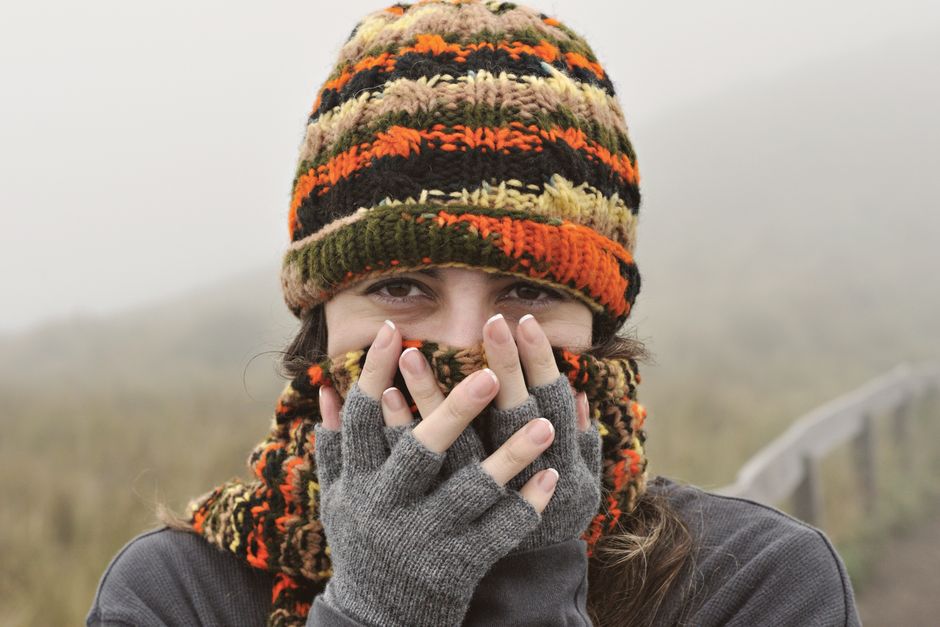
Most winter outfits do not look unfinished because the coat is wrong. The problem is usually three accessories competing at once, so I start with one color anchor and build around it.
Why matching gloves, hats and scarves often look wrong
The three-piece problem
A hat, scarf and pair of gloves in the exact same color can look tidy in a shop display but flat on a person. The eye sees one large block of matching fabric around the face, neck and hands. That block can hide the shape of the coat and make an expensive outfit feel like a uniform. The opposite mistake is just as common: a black coat, a red plaid scarf, cream gloves and a green hat. Each item may look good alone, but the outfit has no visual center.
I use a simple rule: two accessories may share a color, but they should not all share the same texture and intensity. A charcoal ribbed hat with smooth leather gloves and a soft gray scarf has movement. Three chunky acrylic knits in three bright colors do not.
The one-rule fix
Coordinate the temperature and the mood before matching the color. Warm camel, tobacco, cream and burgundy create a different mood from icy gray, navy and black. Pick one mood first. Then choose accessories that look like they belong in the same weather and wardrobe, even if their colors are not identical.
The strongest everyday combinations usually include one quiet piece, one noticeable piece and one practical piece. The quiet piece might be a black glove. The noticeable piece might be a striped scarf. The practical piece might be a close-fitting wool hat that works under a hood. This balance keeps the face framed without making every item ask for attention.
How to choose a color anchor for winter accessories

Start with the coat
Your coat should control the accessory palette because it covers the most fabric. With black, navy or charcoal outerwear, add camel, cream, burgundy or forest green. With camel or brown, choose cream, chocolate, rust, olive or deep navy. With a bright coat, keep two accessories neutral and let the coat remain the loudest item.
Do not match a hat to your hair and a scarf to your shoes as separate decisions. That creates small color islands. Instead, find one shade already present in the coat, boots or bag and repeat it once near your face. That single repeat makes the outfit feel planned.
Use one repeat, not three
A scarf can repeat the coat color in a stripe. Gloves can repeat the boot color. The hat can then sit between the two in a neutral shade. For example, a navy peacoat, cream scarf with a navy stripe, brown leather gloves and a charcoal beanie has four colors but only one clear relationship.
My strongest color rule for 2026 is simple: keep the hat closest to your face in a shade that gives contrast, not one that disappears into your hair or coat. A cream hat lifts a dark outfit. A charcoal hat calms a bright scarf. The right contrast does more for your appearance than a perfectly matched set.
Which materials work for cold, wind and rain?
Warmth comes from trapped air
Accessories solve different problems. Wool and fleece trap warm air while still managing moisture. Windproof shells stop moving air from stripping that warmth away. Water-resistant fabric helps in wet snow, but it does not automatically make an item warm. A thin waterproof glove can leave your fingers colder than a thick wool glove on a dry day.
| Material or feature | Best use | Main tradeoff |
|---|---|---|
| Merino wool | Daily wear, commuting and layering | Warm and breathable, but can wear thin at the fingertips |
| Cashmere | Dressy scarves and mild winter days | Soft and light, but less hard-wearing and usually less wind resistant |
| Fleece | Active walks and damp conditions | Dries quickly, but can look casual and lets wind through without a shell |
| Leather with insulation | City wear, driving and polished outfits | Good wind protection, but needs care and can feel stiff |
| Waterproof shell | Snow, rain and ski conditions | Best weather protection, but often bulky with formal coats |
Use the table honestly
For a short walk from a car to a restaurant, soft wool and leather usually look better than technical ski gear. For a windy platform, cycling commute or long outdoor event, choose wind protection first. I would rather wear a plain black insulated mitten than a beautiful unlined glove that leaves my hands numb.
The same logic applies to scarves. A large wool scarf blocks drafts at the collar. A thin cashmere scarf adds softness and polish but needs a coat with a good neckline. Buy for the weather you actually face, not the weather shown in the product photograph.
How to build a coordinated set in five minutes

The five-step check
- Put on the coat first. Look at its dominant color and decide if the outfit should feel sharp, relaxed or outdoorsy.
- Choose the scarf next. Use it to add the main pattern or the strongest secondary color. If the coat is patterned, use a solid scarf.
- Add the hat for contrast. A close-fitting beanie keeps the silhouette clean. A pom hat or trapper hat adds more visual weight, so keep the scarf simpler.
- Choose gloves by function. Leather suits a dress coat, wool suits mild dry weather, and insulated mittens suit long exposure to cold.
- Check texture and scale. Do not combine a tiny silk-weight scarf with an oversized cable-knit hat unless the contrast is deliberate. The pieces should look similar in visual weight.
The mirror test
Stand several steps away from a mirror and cover each accessory with your hand one at a time. If removing one item improves the outfit, that item is doing too much. If the outfit looks dull without one piece, that is the piece worth keeping.
Also check the practical fit. The scarf should sit under the coat collar without forcing the coat open. The hat should cover the ears or leave them intentionally exposed, not sit halfway up the head. Gloves should reach the coat cuff so cold air cannot enter at the wrist.
Which gloves should you buy for real daily use?

Do I need gloves or mittens for commuting?
Buy gloves if you handle keys, a phone, a transit card or a steering wheel every day. The L.L.Bean PrimaLoft Therma-Stretch Fleece Gloves cost about $39.95 and offer stretch, moisture management and double-layer cuffs. They are the practical winner for ordinary commuting because they stay close to the hand and do not fight with coat sleeves.
Do not buy them for a full afternoon outside in freezing wind. Fingers share heat inside mittens, so mittens are warmer when dexterity matters less. A large mitten also gives a casual outfit a stronger shape, so balance it with a quiet scarf and simple hat.
Are merino gloves enough in wet weather?
Merino gloves feel comfortable and handle mild dampness well, but they are not a waterproof system. REI Co-op Merino Wool Liner Gloves 2.0, around $32.95, are best as a base layer under a shell mitten or for dry city weather. Icebreaker Merino 260 Quantum Gloves, around $50, are another warm layering option, but their price makes sense only if you will wear them often.
My clear verdict: buy the REI liners for versatility, buy insulated waterproof gloves for snow, and skip expensive merino gloves if you already own a warm pair that fits. The perfect material cannot fix a glove that is too tight; compressed insulation leaves less warm air around your fingers.
The mistakes that ruin a coordinated winter outfit
My strongest buying opinion
Do not buy a matching hat, scarf and glove set unless you love the complete set in person. Sets often force one color and one texture across the whole outfit. Spend the money on the item you will touch most or use longest, then build around it. For most people, that means a good scarf first, a useful hat second and gloves chosen for the actual weather.
Five mistakes to avoid
- Buying a pale scarf that shows makeup, road salt and coffee marks after one week.
- Choosing a hat that looks good loose but cannot fit under the coat hood.
- Buying leather gloves without checking finger length and wrist coverage.
- Using a delicate cashmere scarf for wet snow when a wool blend would dry faster and cost less.
- Adding a bright hat, bright scarf and bright gloves to a patterned coat.
For a simple final formula, use one statement piece, one supporting neutral and one function-first item. A navy coat, cream wool scarf, charcoal merino hat and black gloves will work across years of winter clothes. A camel coat, burgundy scarf, brown leather gloves and cream hat gives more warmth without becoming loud.
That is the fix for the outfit I described at the start: the black coat stays, the accessories stop competing, and each piece has a job. The result looks considered at the door and still works once the temperature drops.